Key Takeaways:
- High-silica engineered stone is now more regulated, so natural stone and sintered surfaces are often considered safer and more responsible choices for modern homes.
- Engineered stone can be damaged by heat and may scorch at around 150°C, while natural stone like granite can handle very high temperatures of over 500°C.
- Natural stone can often be repaired and polished to look new again. Damaged engineered stone is usually difficult to fix.
- It is important to understand the difference between etching (chemical damage) and staining (liquid absorption), especially for marble and limestone.
- Engineered stone may turn yellow over time when exposed to sunlight due to a process called photo-degradation.
Natural stone refers to organic materials like granite, marble, and quartzite quarried directly from the earth and sliced into slabs. Engineered stone is a man-made composite, typically consisting of 90% crushed quartz bound together by 10% polymer resins and pigments to create a consistent, non-porous surface.
Choosing a countertop used to be a simple trade-off between the maintenance of marble and the durability of quartz. However, the market in 2026 looks vastly different.
For homeowners in Singapore and Malaysia looking for a reliable natural stone supplier in Malaysia now involves ethical sourcing, long-term repairability, and health safety.
Silica Safety in 2026: What Homeowners Need to Know
Why is silica safety important now?
In recent years, the global stone industry has changed fast. After Australia introduced a national ban on 1 July 2024 on all engineered stone containing 1% or more crystalline silica, many countries, including those in Southeast Asia, started moving toward safer materials.
What is the risk with traditional quartz?
According to IOSH, most engineered quartz can contain up to 95% crystalline silica. When workers cut or shape these materials, they create fine dust. Breathing in this dust over time can lead to a serious lung disease called silicosis.
What are the safer alternatives in 2026?
Today, leading brands are switching to alternatives that contain less than 1% crystalline silica, or are completely free of resin, such as:
- Sintered stone
- Porcelain
- Natural stone
Choosing natural stone or next-generation surfaces is not just about design. It also supports a safer and more responsible supply chain, protecting the health of the workers who build your home.
Etching vs. Staining: Key Differences Every Homeowner Should Know
When choosing stone surfaces, understanding etching and staining helps you protect your countertop and keep it looking new.
What is staining?
Staining happens when liquids like coffee or red wine soak into the stone’s tiny pores.
- Common in: Granite, marble
- Cause: Absorption of liquids
- Prevention: Regular sealing helps block stains
What is etching?
Etching occurs when acidic liquids react with the stone and wear away a thin surface layer.
- Common in: Marble, limestone, travertine
- Cause: Acids like lemon juice or vinegar
- Result: Dull, faded water mark spots
How to Fix Etching
Etch marks cannot be cleaned away. The surface needs to be re-polished to restore its shine.
Best Alternative
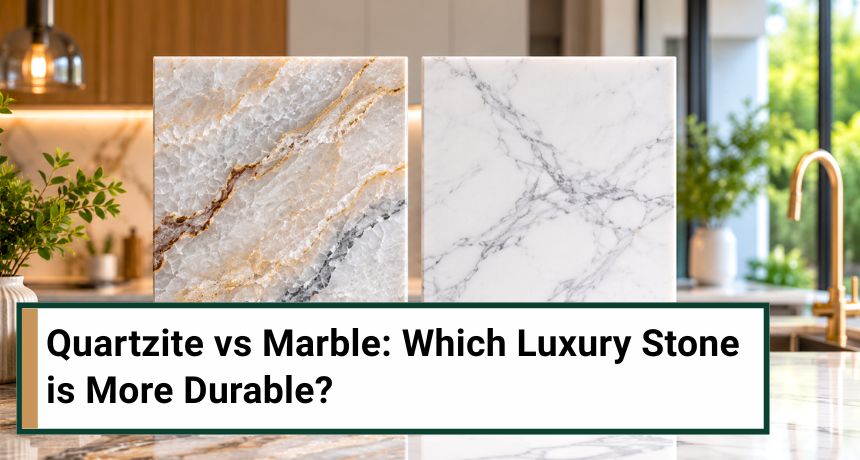
If you love the look of marble but want less maintenance, quartzite is a top choice.
- Similar appearance to marble
- Harder surface (Mohs hardness of 7)
- Resistant to acid, so it won’t etch easily
Stains can be prevented and cleaned, but etching requires repair. Choosing the right material can save time, cost, and effort in the long run.
Thermal Shock in Countertops: The 150°C Truth Homeowners Must Know
Contrary to popular belief, engineered stone has certain limitations and is susceptible to damage at high temperatures.
What is thermal shock?
Thermal shock happens when a surface experiences sudden, extreme heat. This can cause:
- Discoloration (yellow or burn marks)
- Permanent rings
- Cracks in the material
Engineered Stone: Heat Limit Explained
Engineered quartz contains resins (polyester or epoxy) that start to degrade at around 150°C.
- Placing a hot pot (like soup or laksa) directly on the surface can cause damage
- Effects are usually permanent and difficult to repair
Natural Stone: Built for High Heat
Materials like granite and quartzite are formed under extreme natural conditions.
- Can withstand temperatures above 500°C
- Much more resistant to heat and thermal shock
- Ideal for heavy cooking environments
Quick Comparison Guide
| Material | Heat Resistance | Hardness (Mohs) | Repairability |
| Granite | Excellent (500°C+) | 6–7 | High (restorable) |
| Marble | Moderate | 3–4 | High (restorable) |
| Engineered Quartz | Low (~150°C limit) | 7 | Low (permanent damage) |
| Sintered Stone | High (resin-free) | 7–8 | Moderate |
Practical Tip for Daily Use
Always use a trivet or heat pad, especially for engineered quartz. Even if damage doesn’t happen immediately, repeated heat exposure weakens the surface over time.
Engineered stone is not heatproof. If you cook often, choosing heat-resistant materials like granite, quartzite, or sintered stone will give you better long-term durability.
UV Yellowing and Repairability: What Most Countertop Buyers Don’t Know
When choosing a countertop, many people focus on looks and price. But long-term issues like UV damage and repairability are often overlooked.
UV Yellowing in Engineered Stone
Engineered stone contains polymers (plastic-based resins). Over time, these materials react to sunlight.
In hot, sunny climates like Singapore and Malaysia:
- UV exposure slowly breaks down the surface
- White quartz can turn slightly yellow or amber
- This usually happens over 5–10 years, especially near windows
The Repairability Problem
Engineered stone is made from a uniform mix of minerals and resin. This creates a challenge when damage happens:
- Deep cracks are difficult to repair
- Heat or burn marks are usually permanent
- Repairs often remain visible
This is known as the repairability paradox. It looks strong, but is hard to restore once damaged.
Natural Stone: Easier to Restore
Natural stones like granite behave differently because they are solid, organic slabs.
If damage occurs:
- Chips can be filled with colour-matched resin and stone dust
- Skilled craftsmen can smooth and repolish the surface
- The countertop can often look close to original condition
Engineered stone may change colour over time and is difficult to repair, while natural stone is often more forgiving and easier to restore when damaged.
Countertop Selection Guide: Which Material Should You Choose?
Choosing the right countertop depends on how you cook, clean, and use your kitchen every day.
Use Natural Stone when:
- You cook often and use hot pans directly on the surface
- You like natural changes and character over time
- You want a surface that can be repaired and restored even after many years
Best for: Heavy cooking and long-term durability
Use Engineered Stone when:
- You want a clean, consistent colour across your home
- You prefer a low-maintenance surface
- You do not want to worry about sealing or regular upkeep
Best for: Easy care and uniform design
Use Sintered Stone when:
- You want strong heat resistance like natural stone
- You also want a non-porous, low-maintenance surface
- You prefer a modern, high-performance material
Best for: A balanced mix of durability and convenience
There is no “best” material for everyone. The right choice depends on your cooking habits, design preference, and how much maintenance you are comfortable with.
From Selection to Craftsmanship: What Happens After You Choose Your Stone
Choosing the slab is only the first step
In the Malaysia–Singapore region, most homeowners select their stone in large stone yards in Johor Bahru (JB), where there are many options in terms of colour, pattern, and price.
Why craftsmanship matters more than selection
Even a high-quality slab can fail if it is not fabricated and installed properly. Poor workmanship can lead to uneven joints, visible seams, or material damage.
Modern fabrication standards in 2026
Today, professional stone fabrication uses advanced methods such as:
- Water-jet cutting for high precision and reduced dust
- Accurate edge finishing for cleaner joints
- Book-matching techniques to align natural stone veins seamlessly across surfaces
These steps help ensure the final countertop looks smooth, continuous, and visually consistent.
Don’t overlook installation and logistics
After selecting your slab, the next critical stage is delivery and installation. This includes:
- Safe cross-border transport from Malaysia to Singapore
- Proper handling to prevent cracks or damage
- Compliance with Singapore installation standards
A beautiful slab is not enough on its own. The final result depends on precise fabrication, careful transport, and skilled installation.
Learn more: Finding a Reliable Tiles Supplier in Singapore & Johor
Conclusion
Choosing between natural and engineered stone is about finding a material that fits your lifestyle and daily use.
Some people prefer the strength of granite, while others prefer the clean and low-maintenance finish of engineered quartz. A successful renovation also depends on proper selection and installation.
With 30 years of experience as a reliable stone supplier in Malaysia and Singapore, Mylestone understands the balance between visual elegance and structural performance.
We provide Marble, Travertine, Granite and many more stone types.
Sources:
- Workplace Safety and Health (General Provisions) Regulations – Singapore Statutes Online: Specifies the permissible exposure levels for toxic substances including crystalline silica in Singapore. Available at Singapore Statutes Online.
- Department of Occupational Safety and Health (DOSH), Malaysia: Guidelines on the Use and Standards of Exposure of Chemicals Hazardous to Health (USECHH Regulations 2000). Available at DOSH Malaysia.
- IOSH Services Limited: Silica dust – What it is, who is at risk and how to protect workers
Frequently Asked Questions (FAQs)
1. Is natural stone more expensive than engineered stone in 2026?
Generally, yes. While basic granites are comparable to mid-range quartz, premium natural stones like Calacatta Marble or Taj Mahal Quartzite are significantly more expensive due to rarity and the cost of ethical quarrying.
2. Does natural stone really need to be sealed every year?
Not necessarily. With modern 2026 Nano-sealers, many natural stones only require sealing once every 3–5 years, depending on usage. Some high-density granites may never need sealing at all.
3. Why is Australia’s ban on engineered stone relevant to Singapore/Malaysia?
It has forced global manufacturers to change their formulas. Most reputable suppliers in SG/MY now prioritize Low-Silica products to protect workers and stay ahead of potential local labour regulations.
4. Can I use natural stone for my outdoor BBQ pit?
Yes. Natural stone (especially granite and soapstone) is the superior choice for outdoors because it is UV-stable and won’t yellow or warp under the intense sun and rain of Southeast Asia.
5. What is the Mohs Scale, and why should I care?
The Mohs Scale measures mineral hardness (1 to 10). Knowing that Quartzite is a 7 (harder than steel) while Marble is a 3 (soft) helps you understand why your keys might scratch your marble but not your quartzite.
6. Is Sintered Stone the same as Quartz?
No. Quartz uses resin (plastic) as a binder. Sintered stone (like Dekton or Neolith) uses extreme heat and pressure to fuse minerals together without resin, making it much more heat-resistant and UV-stable.